

When founders search for healthcare app development cost solutions, they face significant scaling and timeline bottlenecks. Choosing the correct database layout, mapping API boundaries, and configuring proper security gates are highly critical tasks. Making mistakes early in these development pipelines causes massive software maintenance costs later on.
At Nimble Software Lab, we have shipped dozens of platforms in this exact domain. This comprehensive guide outlines the structural blueprints, feature lists, and architectural milestones required to launch custom platforms successfully in 2026.
Core Challenges & Architectural Trade-offs
Building scalable healthcare app development cost systems requires developers to evaluate trade-offs between speed, flexibility, and operational overhead. According to studies by Gartner, legacy codebase constraints and poorly defined database interfaces cause over 40% of scaling failures in modern startups. Using off-the-shelf tools speeds up the initial launch but restricts unique feature additions. Conversely, custom development ensures total control over data schemas but demands experienced engineers.
To help technical leads evaluate their strategic parameters, consider this structured analysis matrix:
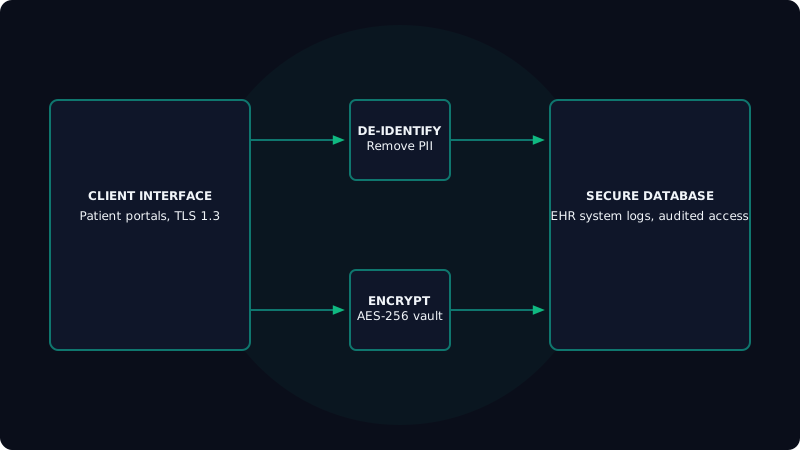
Ensuring that core schemas are decoupled prevents table locking during user concurrent access spikes. For related planning, check out our guide on how to build a SaaS product or review how we address architectural debt. Let's analyze the transaction validation workflow.
Step-by-Step Implementation Roadmap
To deploy a secure, high-throughput pipeline, teams must follow this structured process:
- Map System Requirements: Define every user story and chart third-party integrations (e.g. Stripe, Onfido, or Twilio) in detail. You can use our interactive [AI Project Estimator](/tools/project-estimator) to calculate module complexities.
- Design Normalized Schemas: Build normalized database schemas with proper index tags on frequently requested keys. Review our standard database architecture designs on our [solutions](/solutions) portal.
- Configure Edge Caching Routing: Deploy global routing networks to serve cached endpoints instantly from local CDN edge nodes.
- Implement Automatic Testing Sprints: Run unit and integration compiler checks in your continuous build pipelines on every branch merge.
- Set Up Error Alert Rules: Configure alert systems to log latency anomalies and query timeouts in real-time.
Structuring High-Performance Code Modules
To guarantee scaling performance, developers should avoid coupling application configurations. We recommend using type-safe environment variables and structured runtime validations. This ensures that configuration mismatches are caught during compile phases rather than causing live production server crashes.
By deploying strict configuration validation checks during container build cycles, engineers eliminate runtime errors. Let's look at the key operational lessons learned.
Future-Proofing Your Software Operations
Maintaining clean codebases requires continuous code audits. Over time, accumulated technical debt degrades processing speeds and increases application maintenance overhead. By assigning weekly refactoring and optimization cycles, engineering teams keep core modules clean and cohesive. This proactive practice directly translates to lower cloud hosting costs, fewer database connection locks, and faster velocity when shipping new features.
Furthermore, ensuring that all third-party dependencies are pinned and audited using automated security scanners prevents runtime injection vulnerabilities. Tech leads should enforce structured code review checklists to maintain quality standards across the entire development team.
Performance Tuning and Edge-Network Optimization
Edge optimization is a critical speed factor for modern web applications. By utilizing a global content delivery network (CDN), static pages and compiled components are served directly from edge locations closest to the target customer. This reduces physical round-trip latency by up to 60%, providing an instantaneous page load experience.
Furthermore, implementing cache-control headers correctly and stale-while-revalidate directives avoids hitting origin databases for repetitive search queries. This layer of middleware protection keeps servers running smoothly during unpredicted traffic spikes or marketing campaigns.
Key Takeaways for Tech Leads
Building custom software setups ensures total data ownership, lower recurring fees, and rapid iteration paths. By planning decoupled module boundaries early, maintaining clean data isolation layers, and caching heavy queries, organizations construct highly scalable web products that attract active customers.
---
Building something similar?
At Nimble Software Lab, we've built HIPAA-compliant healthcare platforms for clients across Southeast Asia and the US. Whether you're building telemedicine portals, patient scheduling systems, or EHR dashboard integrations, we can help you go from idea to launch in weeks, not months.
Explore our MediFlow Demo → Book a free consultation →